Gambia Flag SVG: A Designer’s Real-World Embroidery Review
First Impressions: Clean, Bold, and Instantly Recognizable
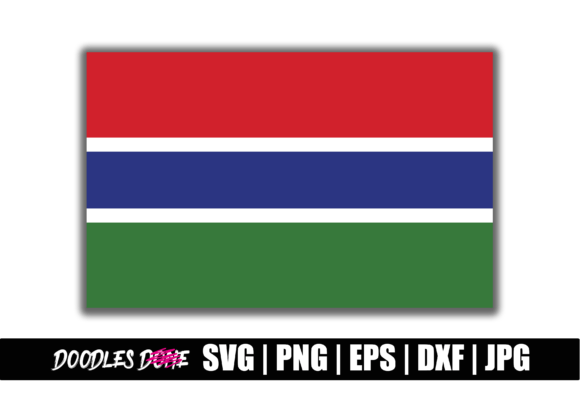
When I opened the Gambia Flag SVG zip file, what struck me first wasn’t technical detail—it was clarity. The red-yellow-blue-green horizontal stripes with the central white stripe feel balanced, intentional, and respectful of the flag’s symbolism. No extraneous flourishes, no forced gradients or drop shadows—just crisp geometry and confident proportion. That’s a huge win for embroidery. As a designer who’s stitched dozens of national flags, I know how easily symmetry collapses in satin stitch or how thin lines vanish under fill density. This one holds its shape visually *before* you even load it into your software—and that’s your first signal it’ll translate well to thread.
A Real Project Test: Embroidering a Gambia-Themed Tote for a Cultural Festival
Last month, I used the Gambia Flag SVG on a natural cotton tote bag for a West African cultural pop-up. Not as a standalone logo—but centered just above the pocket, sized to 3.2" wide. Why that spot? It gave breathing room for the top red stripe and kept the green base stripe from bleeding into the seam allowance. The result? Crisp edges, even tension across all five stripes, and zero puckering—even on unlined, midweight fabric. Customers paused. They pointed. One asked, “Is this hand-drawn?” (It wasn’t—but the clean vector origin made it *feel* handmade.) That’s the quiet power of a well-structured machine embroidery design: it doesn’t shout; it invites attention through precision.
Where It Shines—and Where You’ll Want to Pause
The Gambia Flag SVG excels in applications where bold recognition matters most: embroidered patches, sweatshirt chest logos, baby onesies (for heritage celebrations), aprons for community kitchens, and kitchen towels for diaspora households. Its flat color blocks respond beautifully to satin stitch, and the white center stripe gives natural contrast—no need to over-engineer thread choices.
But here’s where experience kicks in: avoid using it full-size on curved surfaces like structured caps unless you’ve tested hoop placement and stabilizer layers thoroughly. The horizontal bands stretch differently over dome-shaped fabric—and that middle white stripe? It can compress or distort if digitized without subtle contour compensation (which this raw SVG doesn’t include). Likewise, on textured fabrics like terry cloth or loosely woven linen, reduce stitch density slightly and add tear-away + cut-away stabilizer combo. And never skip testing on scrap first—especially if stitching on dark fabric. That red stripe looks vibrant in the PNG preview, but under black thread on navy twill? It needs careful color mapping.
What It Adds to Your Finished Product
- Visual appeal: Strong graphic presence without visual noise—ideal for boutique branding or Etsy listings where thumbnail clarity drives clicks.
- Stitching clarity: No tiny details to lose in fill stitch—so fewer re-runs, less thread breakage, and faster production for small shop owners.
- Product value: Customers associate clean national symbols with authenticity and care—boosting perceived value of personalized gifts or custom apparel.
- Brand consistency: Works equally well scaled down for a lapel pin patch or up for a wall hanging—maintaining legibility across formats.
- Giftability & recognition: Instantly readable at a glance, making it ideal for holiday embroidery, wedding guest favors, or graduation keepsakes tied to heritage.
Practical Designer Notes Before You Stitch
This isn’t just a graphics download—it’s a digital embroidery file entering your workflow. So before you load it into your machine:
- Test the design on scrap fabric *exactly* like your final product—same weight, same weave, same dye lot if possible.
- Check thread color contrast: print a black-and-white mockup to verify stripe separation, especially between yellow and white.
- Review stitch density in your embroidery software—some auto-digitized versions of flag files pack too many fill stitches into narrow bands, causing stiffness.
- Confirm hoop size compatibility: the original SVG scales cleanly, but your digitized version must fit your smallest practical hoop (e.g., 4"x4" for baby items).
- Inspect corners and stripe junctions at 200% zoom—look for stray anchor points or overlapping paths that could cause jump stitches.
- Compare light and dark fabric backgrounds digitally—many crafters overlook how much yellow recedes on cream vs. pops on charcoal.
- Use proper stabilizer: medium-weight cut-away for knits, tear-away for stable wovens, and fusible + tear-away for lightweight linens.
- Verify licensing: since this is a Crafts-category Graphics product, confirm whether commercial use (e.g., selling finished embroidered totes on Etsy) is permitted before listing.
Final Thought: A Quietly Confident Design Asset
The Gambia Flag SVG won’t wow with animation or complexity—but it doesn’t need to. In embroidery, confidence lives in restraint. It’s the kind of design that slips seamlessly into your craft business toolkit: reliable for repeat orders, recognizable for gifting, scalable for digital product previews, and dignified enough for heritage storytelling. Whether you’re an Etsy seller building a West African-themed collection, a small shop owner curating meaningful holiday embroidery, or a hobbyist stitching a personalized baby blanket—you’re not just adding a flag. You’re adding clarity, respect, and quiet professionalism to every finished product.