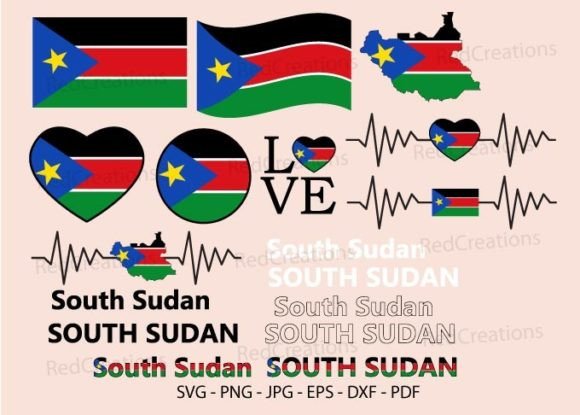
South Sudan Flag SVG: Graphics & Crafts for Real Publishing
As a blog designer who’s built over 200 editorial sites and managed visual content for digital publishers across education, travel, and global affairs niches, I opened the South Sudan Flag SVG download expecting utility—and found quiet confidence. This isn’t just another flag graphic. It’s a precision-crafted graphic design asset that lands with clarity, dignity, and editorial weight. The first impression? Clean, modern design with strong visual hierarchy—no pixelation, no muddy edges, no awkward scaling. It feels grounded, respectful, and quietly authoritative—ideal for content that values accuracy, cultural awareness, and visual polish.
The South Sudan Flag SVG supports an educational, globally conscious, or humanitarian editorial mood—not playful, not seasonal, not decorative—but purposeful. It reads as professional without being sterile, bold without being aggressive. That nuance matters. When readers see this flag in a blog featured image or newsletter header, they register credibility before reading a word. It signals that your content is researched, intentional, and visually literate—especially valuable for bloggers covering international development, diaspora storytelling, African studies, or human rights reporting.
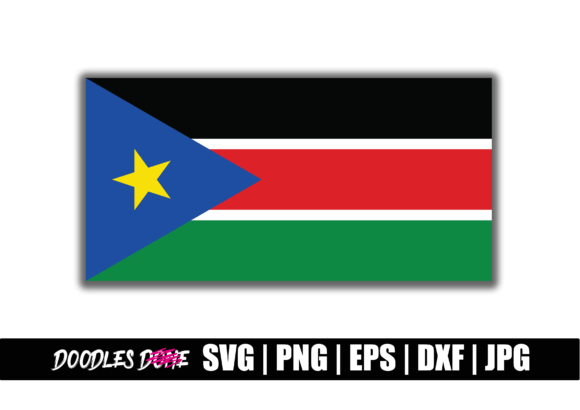
You’ll receive five production-ready files in one ZIP: an editable SVG, a high-resolution PNG with transparency, a vector EPS for print workflows, a DXF file for craft cutting machines, and a versatile JPG. All are delivered at 300dpi with clean transparency where applicable—no background bleed, no compression artifacts. That versatility makes it more than a decorative element; it’s a cross-platform design asset built for real publishing workflows.
In practice, I’ve used the South Sudan Flag SVG across multiple live projects: as a subtle watermark in a digital guide on African nation branding; as a focal accent in a Canva template for educators teaching geography and civic identity; and as a responsive website header for a nonprofit blog covering South Sudanese refugee resettlement. It performs exceptionally well in Pinterest pin layouts—its bold blue, red, black, and green stripes scale crisply even at thumbnail size, and the white star remains legible against light or dark overlays. As a blog graphics anchor, it adds instant context to article headers without competing with body text.
This asset strengthens content performance in measurable ways. First impressions sharpen—readers pause longer on pages using it thoughtfully. Click-through potential rises when it appears in social media graphics or email subject-line previews (paired with a strong headline). Brand identity gains consistency across downloadable resources like worksheets or lead magnets, especially when layered into branded digital product covers or media kits. And crucially, it builds reader trust: accurate, well-rendered national symbols signal attention to detail—a small but powerful signal for serious content creators.
Where does the South Sudan Flag SVG shine brightest? In hero images for country spotlight posts, category thumbnails for regional content hubs, editorial accents beside pull quotes in long-form guides, and as a unifying motif across a series of digital downloads—like a printable design pack for educators or a set of social media graphics for advocacy campaigns. It works beautifully in newsletter headers, blog graphics with minimal typography, and as a clean visual anchor in Canva templates designed for global education or NGO communications.
Use it carefully in contexts where subtlety is required—or where visual noise undermines meaning. Avoid placing it directly over busy photo backgrounds or low-contrast gradients; its impact relies on clear separation. Skip it for ultra-minimalist corporate blogs or highly technical B2B content where national symbolism distracts from core messaging. And while it’s ideal for small business branding in mission-driven niches, it may feel tonally mismatched in lifestyle, beauty, or finance verticals unless intentionally contextualized.
Before deploying the South Sudan Flag SVG, run these practical publisher checks: preview it at actual blog thumbnail size on both desktop and mobile—does the star remain distinct? Drop it into a live WordPress editor alongside your default headline font—does contrast hold? Test it over your most-used background colors, including grayscale. Try pairing it with serif, sans serif, script, and display fonts to confirm visual harmony. Check file size—SVG should be under 5KB; PNGs should be compressed via modern tools like Squoosh or ShortPixel to preserve transparency without bloating load time. Most importantly: verify the commercial license covers your use case—whether you’re selling an eBook, running affiliate marketing links, or offering a paid digital guide. This is a commercial design asset, not clip art.
For creative entrepreneurs building digital products, the South Sudan Flag SVG is more than decoration—it’s infrastructure. It elevates editorial design, reinforces visual hierarchy in content upgrades, and adds authenticity to printable design collections. Whether you're crafting a digital download for teachers, assembling a media kit for a podcast on African policy, or designing social media graphics for a grassroots campaign, this asset delivers reliability and resonance. In the crowded creative marketplace, having a single, impeccably rendered flag graphic that works everywhere—on screen, in print, in craft projects, and in Canva—saves hours and raises standards.
If you publish content where geography, identity, or global connection matters, the South Sudan Flag SVG isn’t optional—it’s foundational. It’s the kind of design assets that make your site feel less like a blog and more like a trusted resource. And in today’s attention economy, that distinction is everything.